Psychology MSc preparation

Welcome to your MSc programme in the School of Psychology! We look forward to meeting you in September. This page provides a quick overview of what to expect before you arrive but you’ll find out lots more when you meet the team and your fellow students in Welcome Week.
If you have any questions, please reach out to Dr Erica Hepper, Director of MSc Programmes in Psychology or your specific programme leader (see below).
Welcome!
We are delighted to be welcoming you to join our cohort of MSc students in Psychology. We have seven fantastic campus-based MSc courses.
You’ll get the chance to meet other students across all of the courses when you arrive and will also share some modules. So there is lots of opportunity to meet like-minded students and expand your personal and professional network here at Surrey.
Who's who
-

Dr Erica Hepper
Director of Postgraduate Taught Programmes -

Professor Benjamin Gardner
MSc Behaviour Change -

Emma Crouch
MSc Clinical Psychology and Mental Health -

Dr Ellie Ratcliffe
MSc Environmental Psychology -

Dr Pippa Lally
MSc Health Psychology -

Dr Debbie Gooch
MSc Psychology (Conversion) -
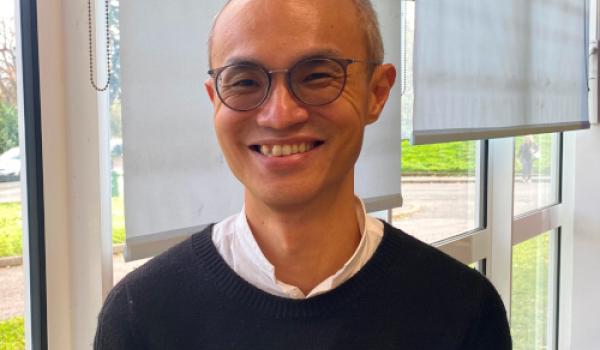
Dr Alan Wong
MSc Psychology in Game Design and Digital Innovation -

Dr Fabio Fasoli
MSc Social Psychology


/
Course information
Our MSc courses are 12 months (full-time) or 2 years (part-time). All of our MSc courses follow the same core structure, with some key modules and sessions shared across programmes and others specific to one discipline or programme. You’ll get more detailed information about your individual modules when you arrive and meet your programme leader.
If you’re studying full-time, you’ll take four taught modules in semester 1 (September - January) and four taught modules in semester 2 (February - June). This will include a mix of subject-focused and research methods classes. If you’re studying part-time, you’ll take two modules each semester. You’ll then write up your dissertation over the summer ready to submit in September.
There are also timetabled 'Introduction to Statistics' classes in semester 1 for students who don’t have a strong statistics background (or have forgotten it!) and to introduce the software, Jamovi. All are welcome to attend.
Optional modules
Some of our courses include optional modules. If you need to select any optional modules you’ll receive an email and make your choice online, but please ask your programme leader for advice on which module will suit you best.
For example, we have two research methods modules: Advanced Research Methods is best suited to students who have a BSc Psychology (or similar social science) degree and a strong grounding in methods already, whereas Academic Research Training is designed to introduce students without such a background to the important steps, methods and considerations in doing research in psychology and the social sciences. Please talk to your programme leader if you’re not sure which is best for you.
Dissertation
One of the most exciting parts of your course is undertaking your dissertation – a substantial piece of research conducted with a supervisor who is an expert in the field. You will be matched to a supervisor in the autumn after indicating your preferences from a wide array of projects and topics. Then you’ll work closely with them, often in a small research team (e.g., with other MSc or PhD students), throughout the year alongside your modules. The dissertation is your final submission in September. If you’re part-time, you’ll normally do the dissertation in your second year.
Additional seminars and opportunities
As well as your compulsory taught modules, we run a range of Professional Skills and Practice seminars across the year that will develop your skills, self-awareness and career goals. You are also invited to attend School of Psychology research seminars to hear about the research of a range of guest speakers, join one of our active research groups, and much more!
We hold a MSc Psychology summer conference each year, where students get together in July to catch up and present their dissertation work-in-progress. So far we’ve been lucky with the weather and had a sunny picnic by the lake as well!
Top tips before you arrive
Get to campus during Welcome Week so you can come along to our welcome sessions, meet your programme leader and course mates, and explore the university and Guildford.
As soon as you have registered online, make sure you can access your university email account, online timetable, and our virtual learning environment SurreyLearn. SurreyLearn is where you will access module materials and the Psychology Postgraduate Support page has a lot of general information too.
Top tips during your course
Enjoy connecting with the other people on your course. They could be life-long friends and will definitely be your future professional network!
Make sure you attend your classes and join in so that you gain the full learning experience. Our courses are designed for in-person involvement and discussion is an important part of a Master’s course. Attendance really does improve performance and makes for a more enjoyable and enriching experience.
Get involved with the research culture at Surrey. Look out for guest speakers, research group seminars, part-time research work or volunteer opportunities, take part in research studies – there is lots going on to expand your knowledge, experience and networks.
Read your University emails every weekday – this is how we keep in touch with you.
If you aren’t sure about something, or are having a hard time, please reach out. The University offers lots of support. Your programme leader will be happy to answer questions about the course, and you’ll have a personal tutor who can signpost you to the most helpful support services. We are here for you.
Have fun! It’s a full-on course but do make space for rest, play, making friends and getting active. There are lots of clubs, sports and societies you can get involved with at Surrey.
Advice from current students
Immerse yourself in your course as much as you can by getting involved in class/group discussions, getting to know others on your course, and joining other opportunities or events - I think the more you put in, the more enjoyment and fulfilment you will get out.
Never be afraid to ask a question. The lecturers in this course are waiting for them!! So don't be scared.
Prioritise your wellbeing and use the support options available when things feel overwhelming - they are there for a reason.
All in all, it goes really quickly so keep the balance and enjoy it!
Recommended reading
All modules will have a reading list, which you’ll have access to online once you complete your online registration. We don’t expect you to do any reading before you arrive, and you will be able to access the required books or articles online so you don’t need to purchase any books unless you choose to.
You might be interested to follow some blogs or podcasts related to psychology or your chosen discipline, including the School of Psychology’s Psychology Today blog.
Watch a fun example of psychology related to game design and digital innovation.
The British Psychological Society website is a great source of information about psychology-related and adjacent careers.
MSc Health Psychology students might also have a look at the BPS Division of Health Psychology member network.
The programme team and the School of Psychology are very much looking forward to welcoming you,